
Table sitting, one transaction
Account Map Sitting
Minjae Park spreads kraft paper and places a wooden block for every account in your transaction. Owners, writable flags, and lamport changes stay on the table until the map matches the message.
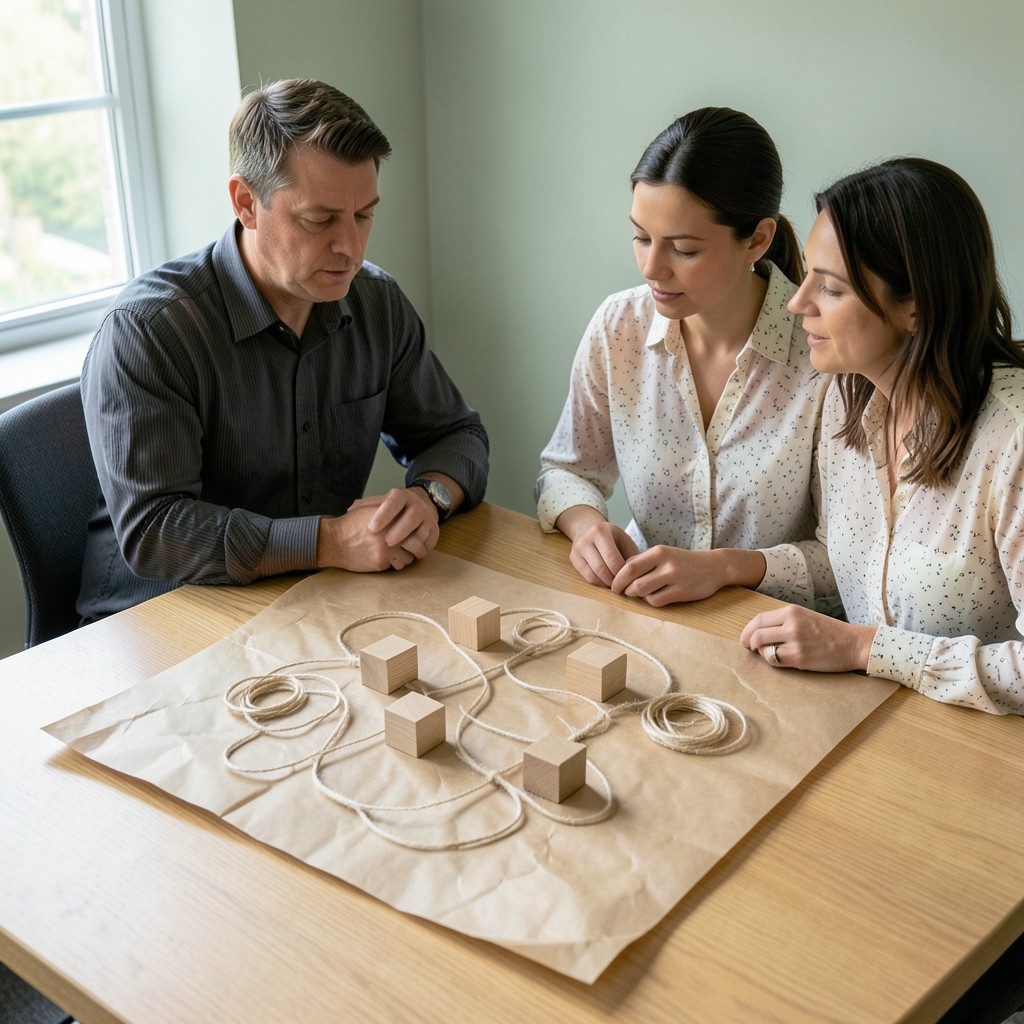
Table sitting, one transaction
Minjae Park spreads kraft paper and places a wooden block for every account in your transaction. Owners, writable flags, and lamport changes stay on the table until the map matches the message.
This sitting is for a visitor who can already find the signature but loses the thread once the account list grows. Token accounts, the mint, the owner wallet, and the fee payer often get collapsed into one name in conversation. The map keeps them apart.
Fixed seat rate for one transaction. Shared visits with a colleague are quoted by the desk.
Think Compass reading room, Namdong-gu, Incheon
The listed rate is informational. A 30 percent deposit, paid by bank transfer after the desk confirms the time, holds the seat.
Minjae writes the account keys down the left margin in the order they appear in the message. Lookup-table accounts, if any, are added in the order they were loaded and marked as loaded.
Each account gets a block. Cotton string runs from a token account to its mint and from a program-owned account to that program. The fee payer is placed at the top because the header treats it first.
Pre and post lamports are written under each block only after the links are agreed. That order stops the balance change from being mistaken for the meaning of the instruction.
The map covers one transaction. A second transaction waits for another booking.
The blocks stay in the room. You take the paper, not the wooden set.
Write to the desk with the session name, a preferred day, and the signature if you already have it on paper. Expect a reply within two working days. The reading room page lists hours and how the table is shared.